

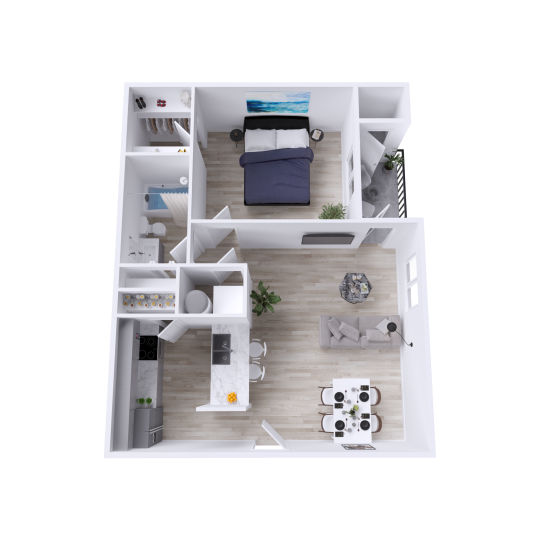
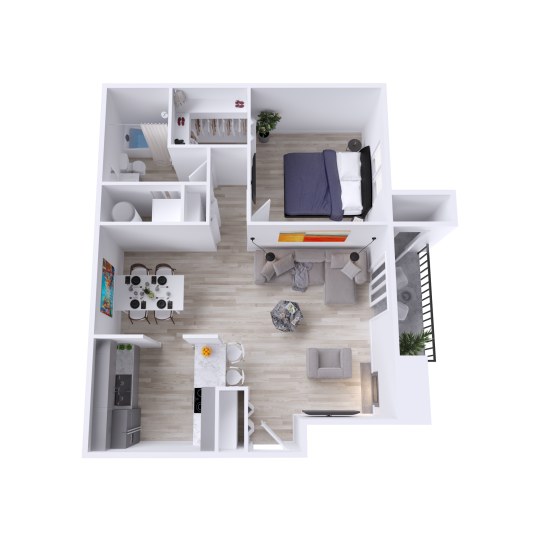
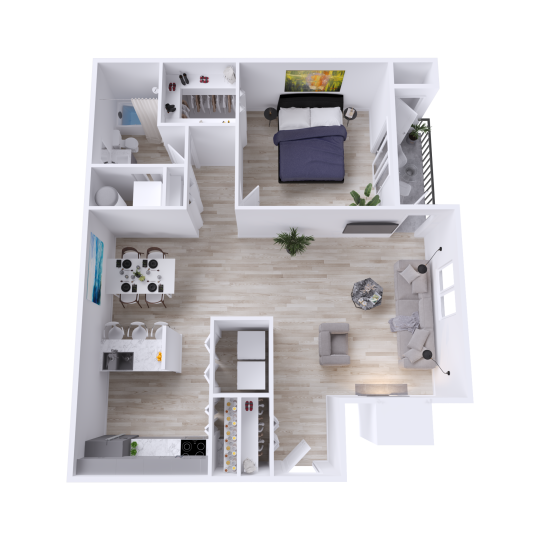
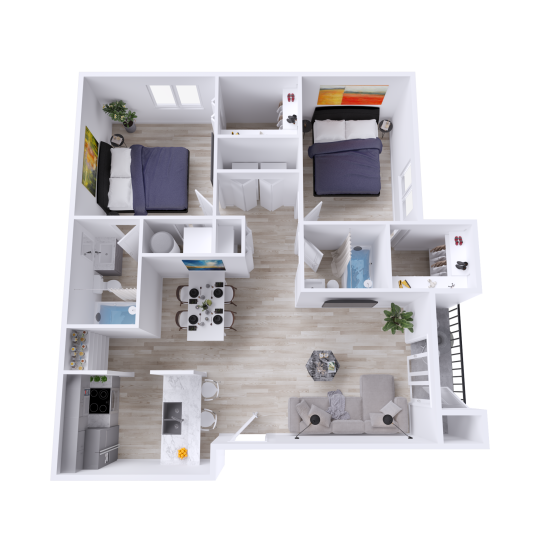
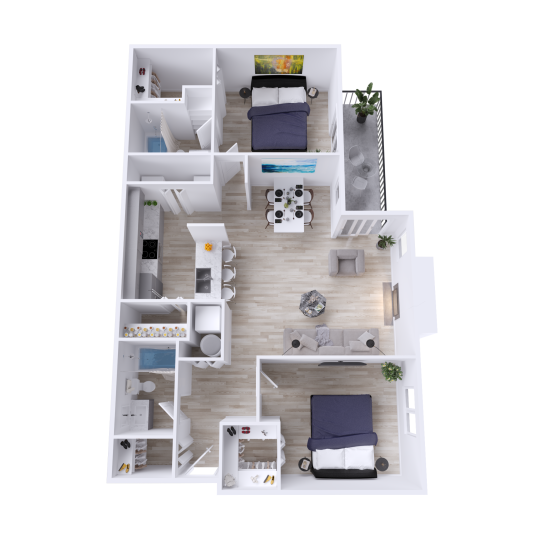
If you are looking for Apartments Near GSU With Two-Bedroom Floor Plans, start by separating two different questions: which Georgia State University campus you actually need to reach, and whether a two-bedroom layout will improve your day-to-day routine enough to justify the extra space. Georgia State University’s main campus is in downtown Atlanta, while GSU also operates Perimeter College campuses in the metro area, so the practical meaning of “near GSU” changes a lot depending on where your classes, labs, or work-study hours are located.
At The Rowen, the published community FAQ states that Georgia State University is approximately 11 miles away, and the property offers two-bedroom, two-bathroom floor plans in two configurations. That makes the community worth considering if your priority is having a second bedroom for a roommate, office, guest space, or quieter study setup, but you should still verify your exact campus route and typical travel times before deciding.
First, make sure you mean the right GSU campus
Georgia State University is not a single-site school in the way many renters assume. Its best-known campus is the downtown Atlanta campus, centered around classroom, residence, and student facilities near the city core. It also includes Perimeter College locations, and those suburban campuses create very different housing search patterns than downtown classes do.
That distinction matters because mileage by itself does not tell you much in Atlanta. A home that looks reasonable on a map can feel very different depending on whether you are driving to an early lecture downtown, heading to occasional evening classes, or splitting time between campus and a job elsewhere in DeKalb, Gwinnett, or the Perimeter area. Before comparing apartments, pull up your actual destination building, not just “Georgia State University,” and check the route at the times you would really travel.
If you will be on the downtown campus most days, verify not only the drive but also parking expectations once you arrive. University life often involves more than one stop, such as class, library time, group meetings, and campus events, so a housing choice that works for a straight commute may feel less easy if you move around campus often. Students who expect to stay late should also compare return-trip conditions after evening classes, not just the morning trip.
If your connection to GSU is through Perimeter College or a hybrid schedule, your priorities may be different. In that case, you may care less about being close to downtown every day and more about having a stable place to study, enough room for shared living, and access to the broader parts of metro Atlanta where you work or spend time. That is where a two-bedroom can become more useful than a smaller layout, even if the apartment is not immediately adjacent to a campus building.
Why a two-bedroom can matter more than simple distance
For many renters tied to Georgia State, the biggest benefit of a two-bedroom is not just adding another sleeping space. It is flexibility. A second bedroom can serve a roommate arrangement, a dedicated office for online classes, a quieter reading room during exam periods, or a guest room for family who visit occasionally. Those uses affect your daily quality of life more than a map pin alone.
The Rowen lists two two-bedroom, two-bathroom layouts: the B1 at 1,005 square feet and the B2 at 1,150 square feet. That difference in size is meaningful if two people will both be home often, or if one bedroom needs to double as a serious work or study area. Two bathrooms can also reduce friction in roommate households or in schedules that start early and end late, which is common for students balancing classes with work.
If you are comparing a one-bedroom plus shared common area against a true two-bedroom, think about noise and boundaries. Studying in a living room works for some people, but not always during exam weeks, virtual lectures, or group projects. A separate bedroom with a door often makes it easier to keep a regular sleep schedule while another person is cooking, gaming, or taking calls in the main living area.
There is also a practical trade-off to examine honestly. More space usually means a higher monthly rent than a smaller floor plan, and published pricing and availability can change. Rather than assuming the larger layout is the better value for your situation, compare the total household cost, how you would use the second bedroom, and whether a roommate, home office need, or guest setup actually justifies it. The leasing team can confirm current rates, move-in dates, and which specific two-bedroom homes are available.
How to evaluate The Rowen for a GSU-focused search
The most relevant reason to look at The Rowen for this question is not a claim about campus life, but the combination of distance guidance already published by the community and the presence of true two-bedroom options. If your routine includes studying from home, sharing housing with another adult, or keeping a separate room for work, the B1 and B2 layouts are the parts of the property information most directly connected to your decision.
Some community and in-home features may also matter to students or university staff, but only in practical ways. The Rowen lists a clubhouse with a full-service business center and homes that are high-speed internet ready, which can be useful if you need backup space for computer work, printing, or remote tasks. It also lists washer and dryer or connections, which can reduce the time spent on off-site errands during busy school weeks. If a specific feature is essential for your routine, ask whether it is in the exact apartment you are considering.
Open parking is another detail worth factoring in if you will commute by car. It does not answer what parking will be like on campus, but it does help you understand the home-side of the trip. If you expect a household with two adults, ask the leasing office about day-to-day parking expectations and any community rules, since that can affect how easy shared commuting really feels.
Finally, use a tour to test the apartment against your actual academic routine, not an idealized version of it. Bring your class schedule, check your route to the GSU building you use most, and look closely at whether the second bedroom would function the way you need it to. If your main goal is balancing campus access with enough room to live and study well, asking to compare the B1 and B2 side by side is a practical next step.